Koish Sports - Pickleball Paddle Design
KOISH V2 is a pickleball paddle concept I designed and rendered for Koish Sports, a Chinese sports brand operating pickleball and tennis courts. This project sits outside my usual design work — it draws on my background in 3D modeling and industrial design thinking to solve a product problem with both functional and brand requirements.
Project Timeline
April 2025 - May 2025
Project Brief
Koish's competitors were already selling their own paddle lines. The stakeholders wanted to enter the product space but didn't want a generic paddle with a logo on it. They wanted something that felt distinctly Koish — a paddle with its own design language that could stand alongside the brand they were building.

The brief had two layers. First, design a paddle with real performance considerations built in — not just a pretty object. Second, make it feel like a Koish product, not a rebadged version of something already on the market.

I was responsible for everything: competitor research, shape exploration, graphics development, 3D modeling, and final photorealistic rendering.
Research & Inspirations
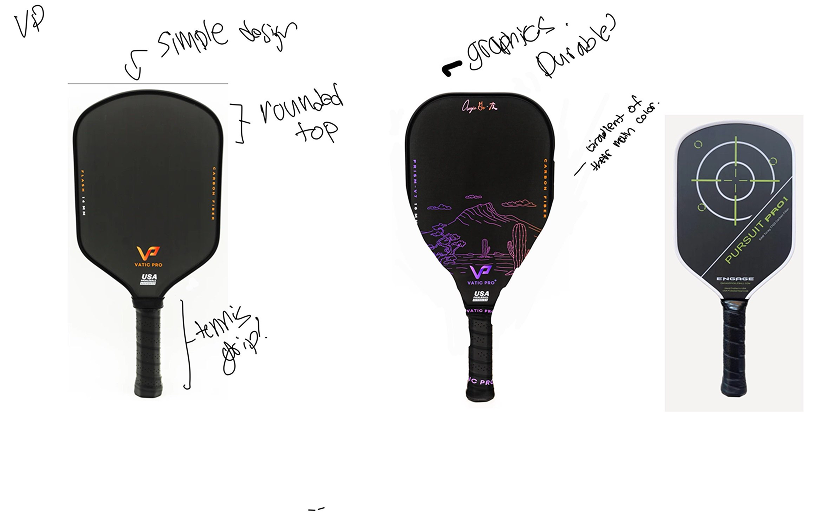
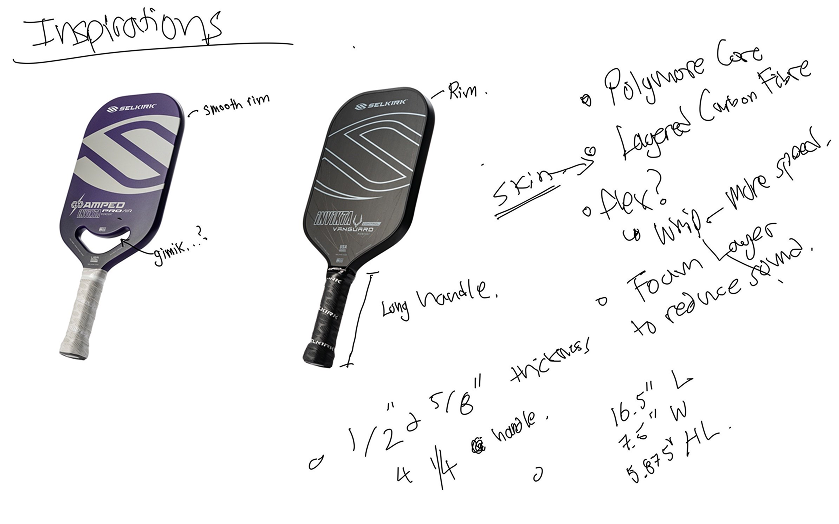
I started by studying existing paddles on the market — specifically Selkirk and Vatic Pro — documenting what worked and what didn't across grip style, face material, frame shape, and handle length.

I also researched material properties: polypropylene cores for noise suppression, carbon fiber for strength-to-weight ratio, and foam layers for vibration reduction.
Shape Exploration
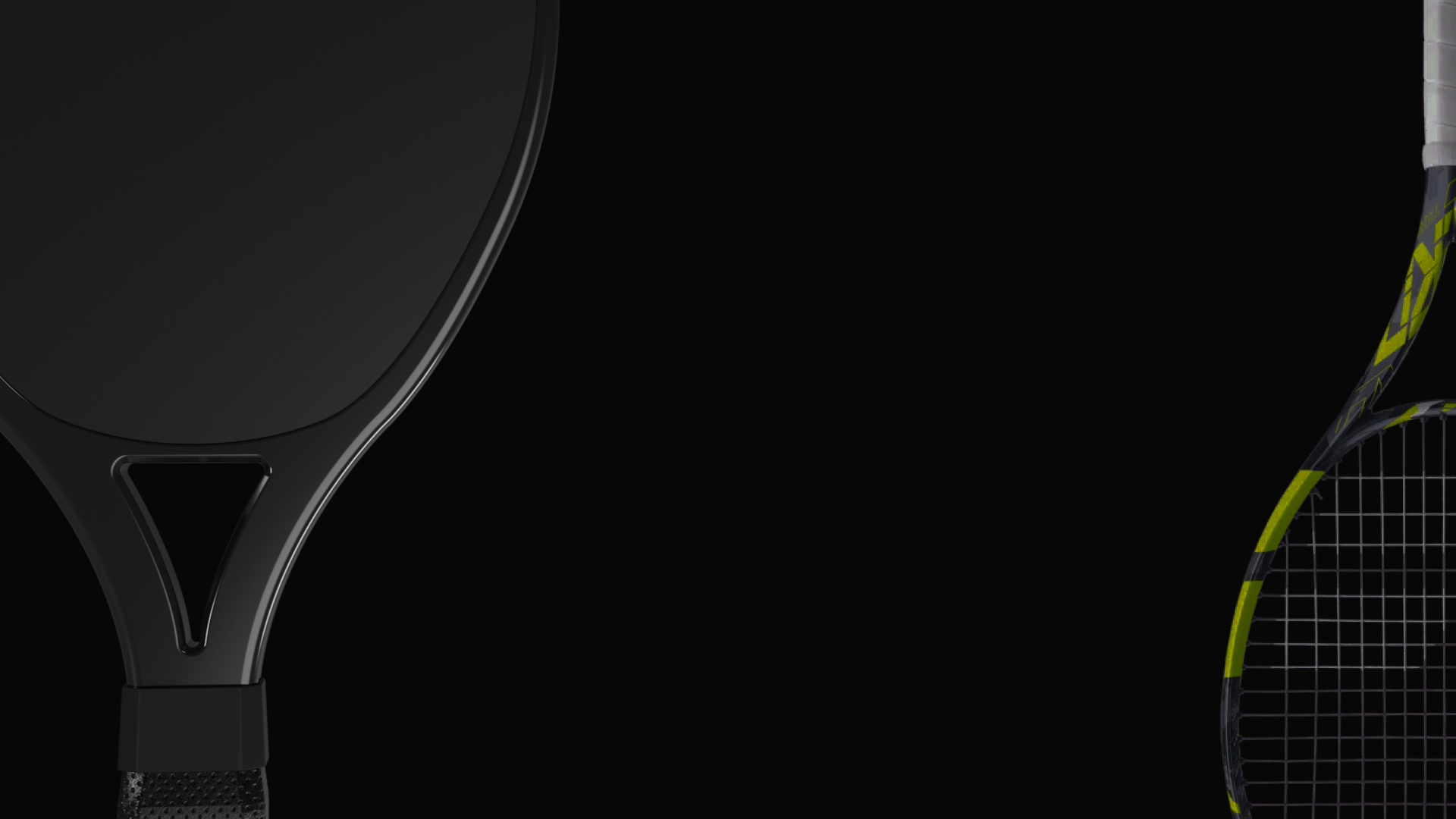
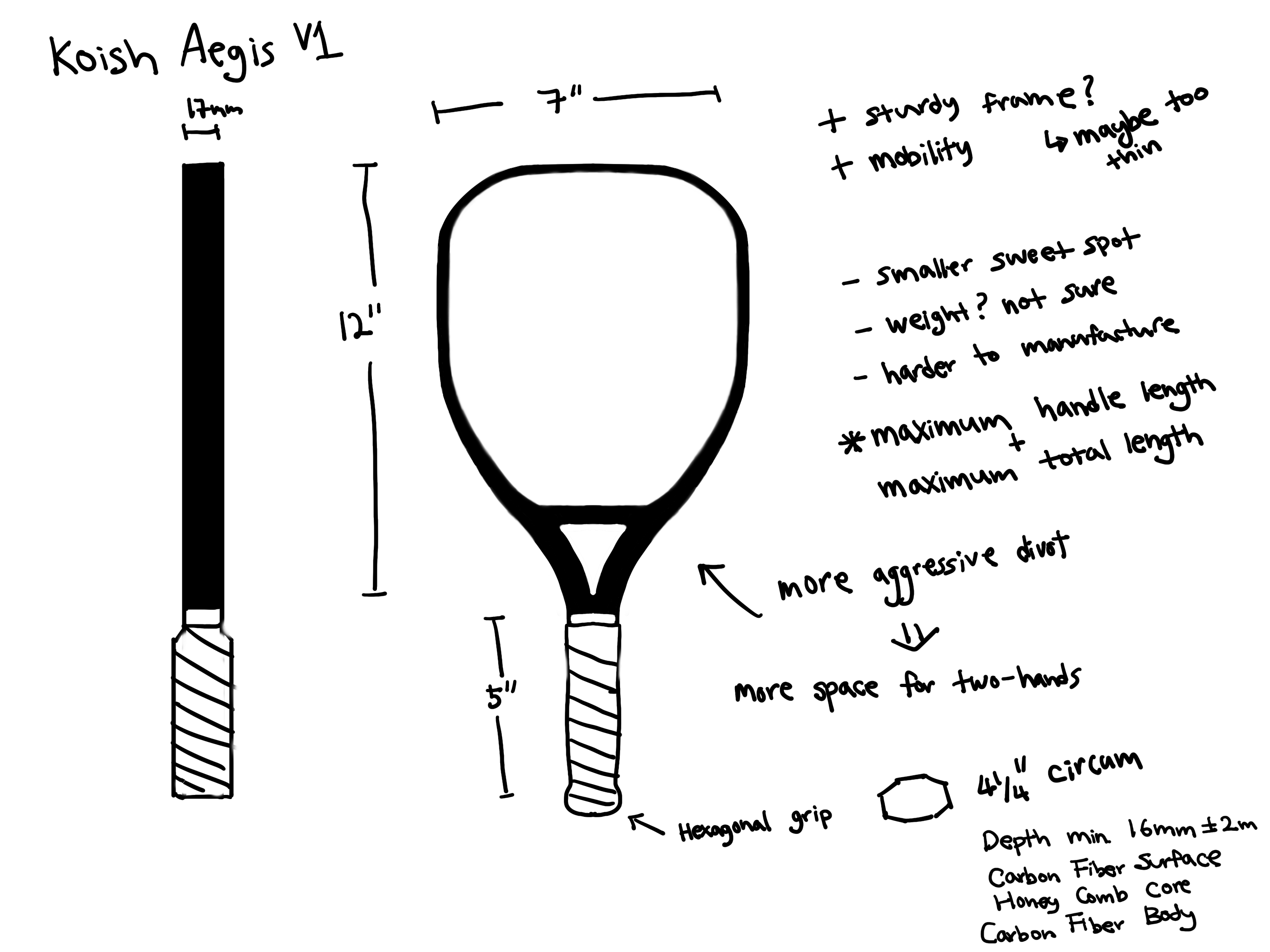
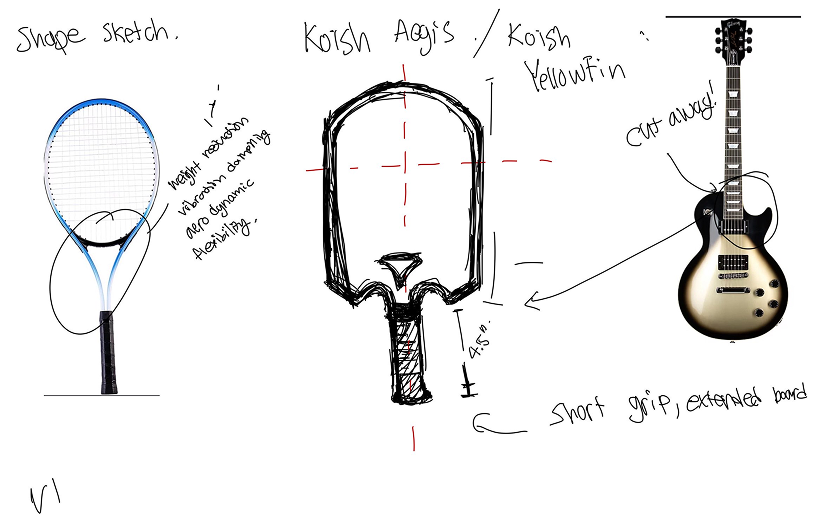
The first sketch drew inspiration from a guitar cutaway — a short grip with an extended body to maximize surface area while reducing weight. I explored two main shape directions before committing to V2: a rounder top profile for power and a more angular frame for control. I also explored how a slim throat transition borrowed from tennis racket geometry could improve two-handed play versatility.
Graphics Exploration
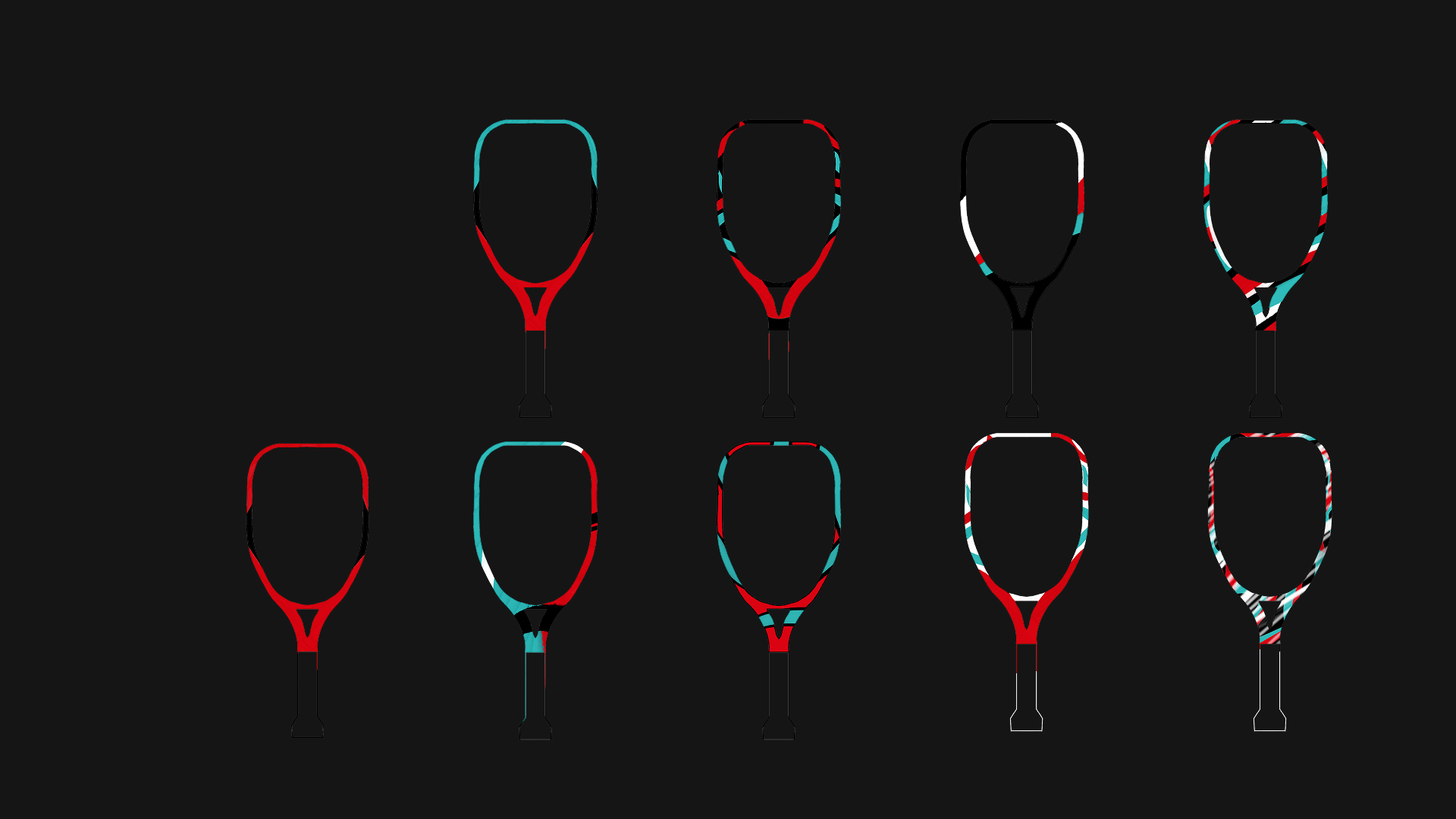
Before finalizing the visual direction, I explored multiple colorway and graphics combinations across nine frame variations — using Koish's brand colors of red and teal against the black carbon fiber base.
Final Design
The KOISH V2 brings together every decision made across the research and exploration phases into a single cohesive product.
Form
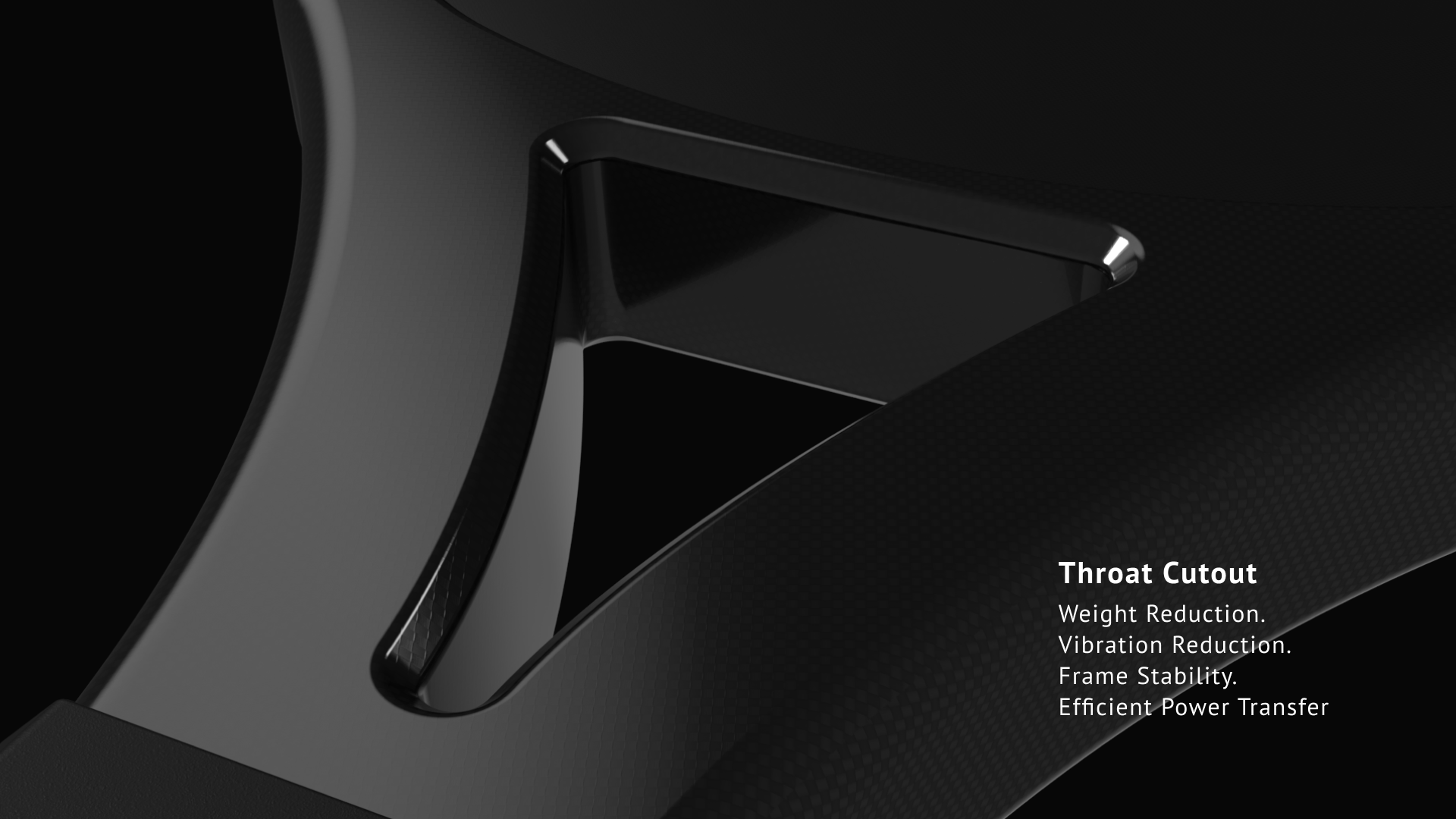
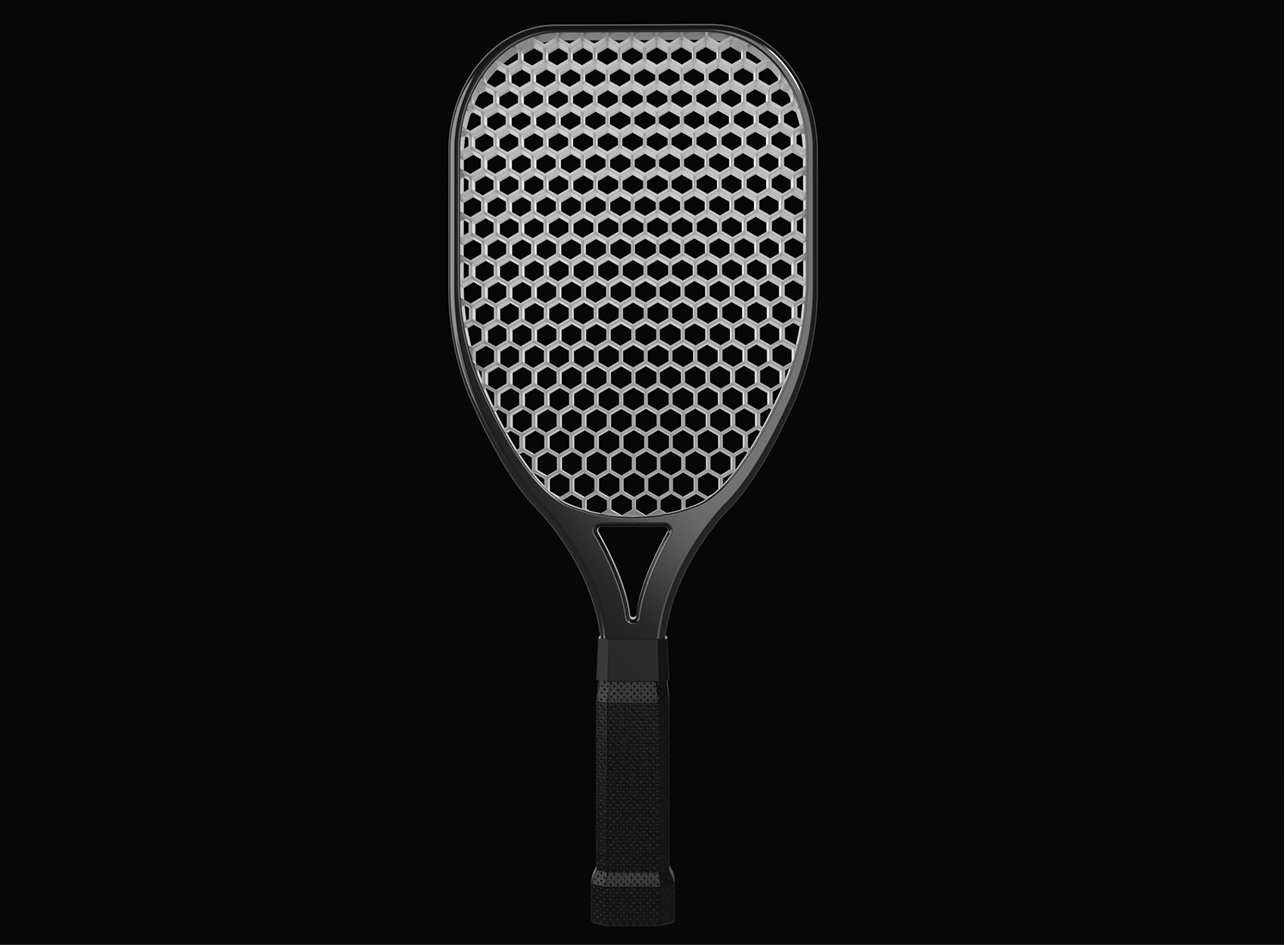
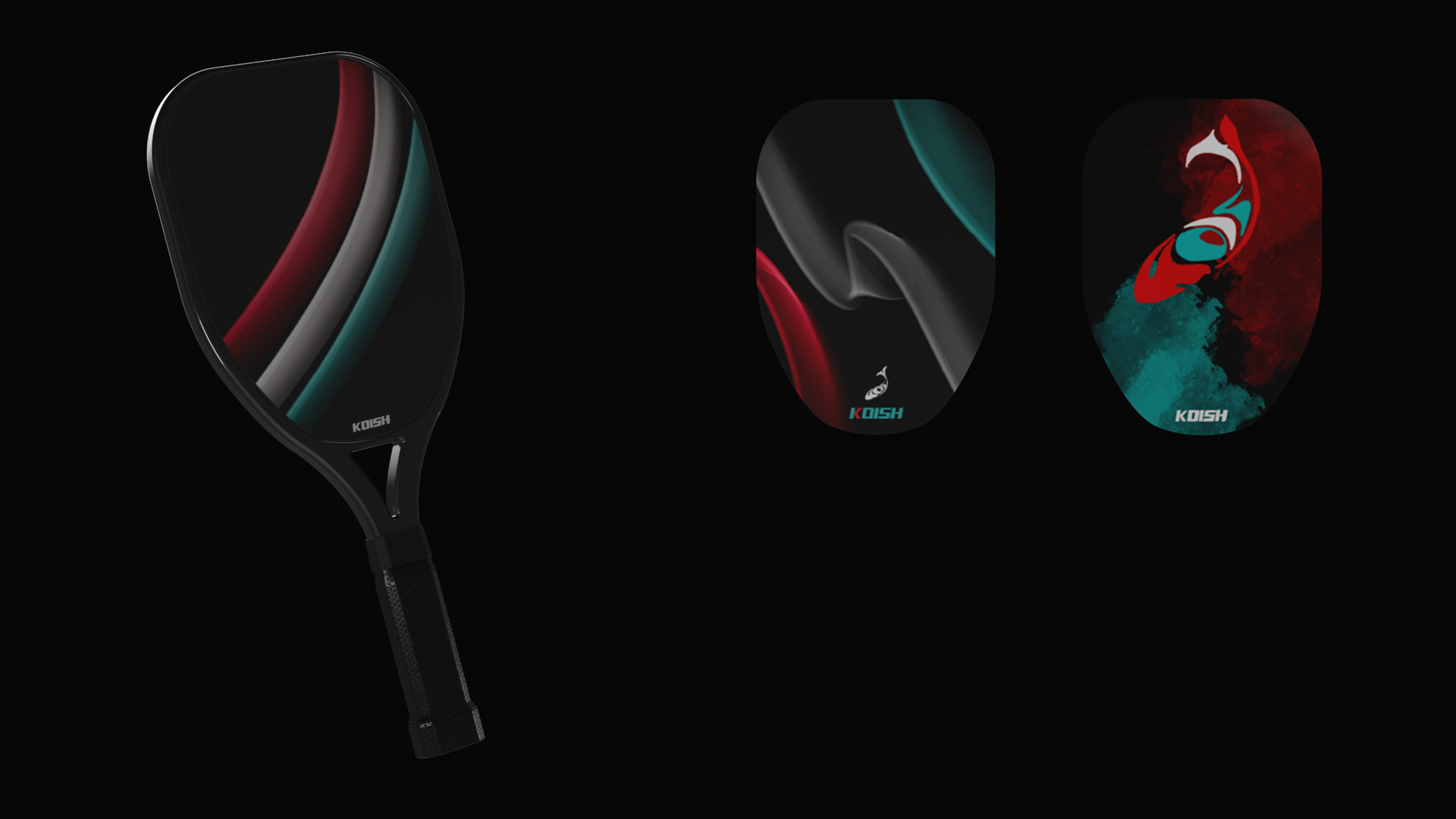
The body uses a wide rounded top profile to maximize surface area for power and consistency. The slim throat cutout — borrowed from tennis racket geometry — reduces weight, dampens vibration, improves frame stability, and enables efficient power transfer. The face-to-handle transition is deliberately slim to accommodate two-handed play without sacrificing control.
Materials
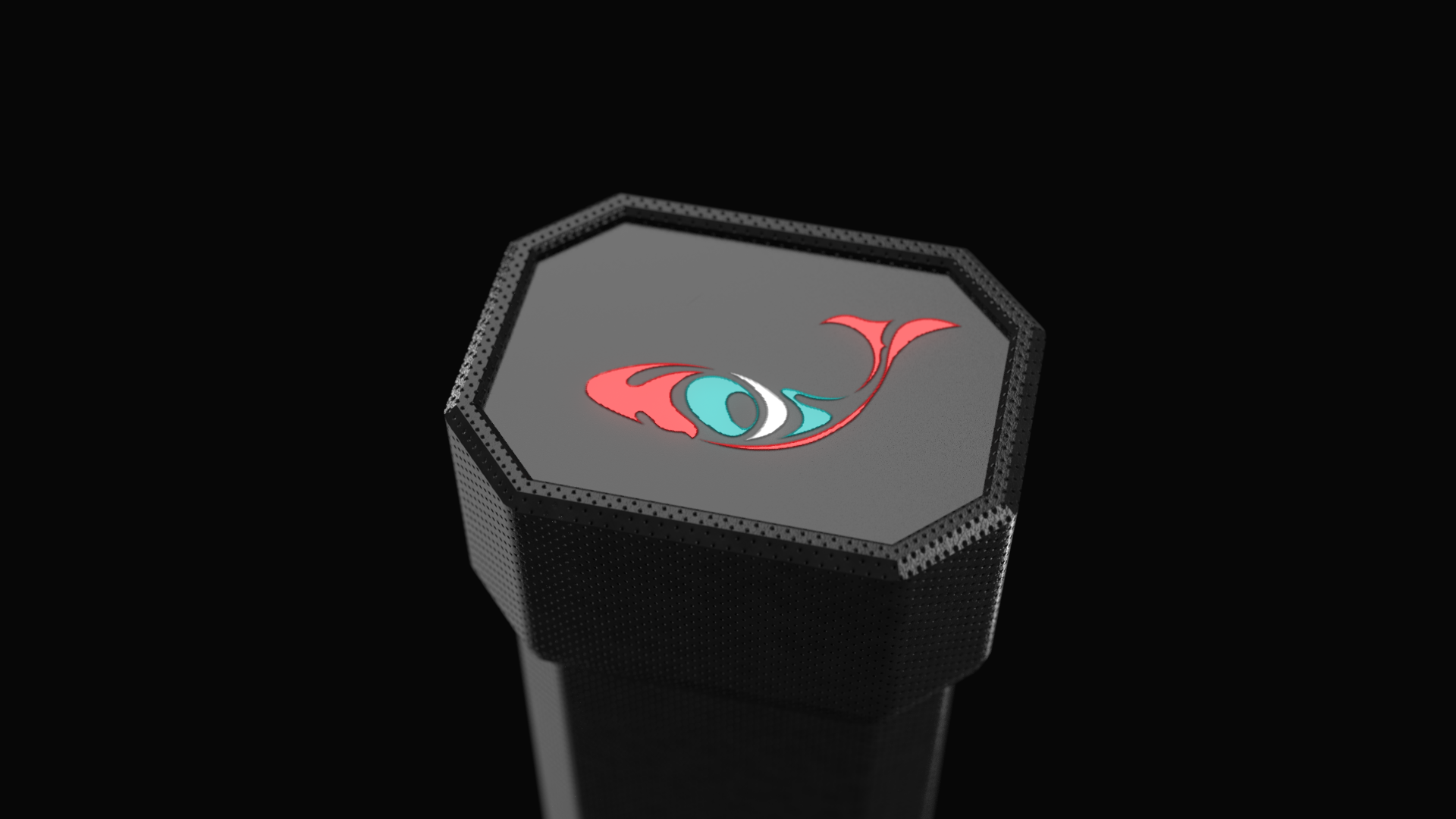
The face uses a carbon fiber surface for consistent ball response and durability. The core is polypropylene for noise suppression and control. The octagonal grip improves hand positioning stability and is branded with the Koish logo on the butt cap.
Graphics
Three face graphic directions were developed. The first is minimal — fluid color layers in Koish's red and teal against the carbon black base. The second features the Koish koi logo abstracted across the face. The third takes a bolder approach with the koi rendered in full color against a deep red and teal split background. All three are designed to work with the same paddle form, giving the product line flexibility without requiring a new mold.
Reflection
This project pushed me into territory I don't normally operate in as a designer. Designing a physical product means every decision has a consequence you can't undo with Ctrl+Z — material choices affect weight, shape affects performance, and proportion affects how the object feels in someone's hand. That constraint forced a level of intentionality I found genuinely challenging and rewarding.

The biggest learning was how much research matters before touching any modeling software. The time I spent studying competitor paddles and material properties directly shaped every design decision that followed. Without that foundation, the V2 would have been a visually interesting object with no functional logic behind it.
What I'd do next
The logical next step is physical prototyping — taking the 3D model and working with a manufacturer to produce a test unit. I'd also want to conduct play testing with actual Koish court users to validate whether the shape and weight distribution hold up under real game conditions. The graphics exploration could also be expanded into a full product line with seasonal colorways tied to the brand's marketing calendar.